Significance of High rise infrastructure in Islamabad
A city's growth has always been strongly influenced by migration and urbanization, which has potential impact on family structures, job possibilities, and infrastructure. Large cities are emerging as a result of our country's rapid expansion and Islamabad, the capital town, has long been a top priority.
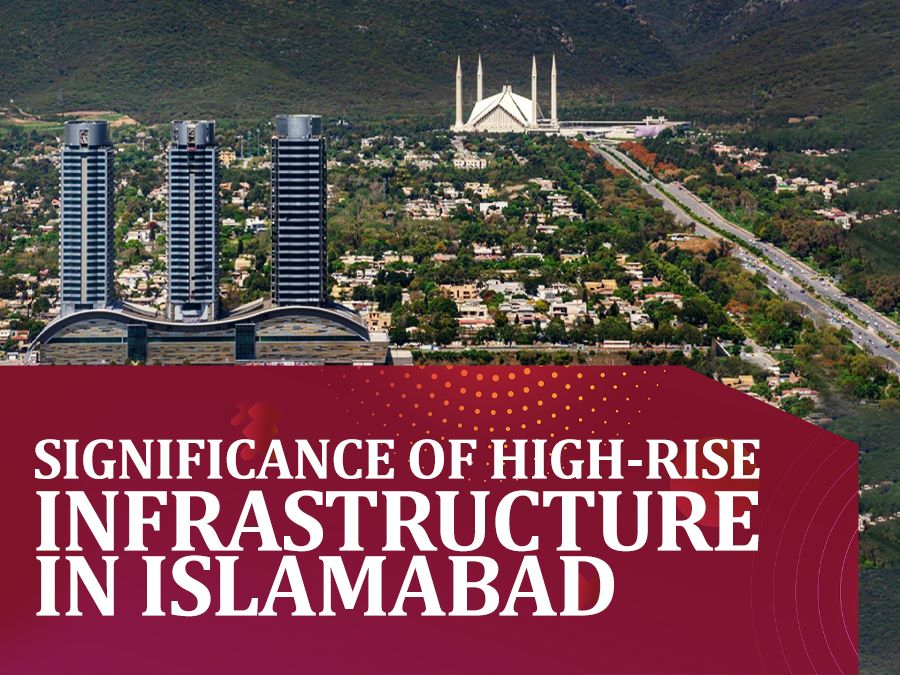
The population density is elevating in connection with the intensive internal and external migration of people to Islamabad, which subsequently to the increase in number of multi-story buildings and skyscrapers. Moreover, the engineering and transport infrastructure is developing at an incredible pace.
The expanding demand for residential, public, and administrative buildings justifies the necessity to convert the city's infrastructure to high-rise. In addition, it prevents us from street pollution providing good natural ventilation and fresh air. Higher floors tend to have residences that feel more spacious and airier, with lots of natural light and none of the congestion typically found in homes in low rise buildings. They play an essential role in the workplace as well, as there is more space for employees and a nice view of the city to keep them motivated while fending off suffocation in office buildings with high-rise infrastructure. Height limits around the world are being revisited and revised to maximize space for commercial and residential growth.
On a national scale, average population growth rate has declined from 2.6% in 1998 to 2.4% in 2017. However, Islamabad capital territory has registered population growth rate of 4.9%. Its population has grown from 0.81 million in 1998 to 2.0 million in 2017.
In essence, Islamabad is one of the developing cities of Pakistan, where urban population is increasing significantly which is the result of migration of people from rural to urban areas in search of jobs and opportunities to improve their living standards.


.jpeg)